Art as a Weapon of Consciousness
- Sydney Music
- Jul 22
- 4 min read
Art has always existed at the edge of society.
Before it became a product, before it became content, before it was measured in likes, streams, sales and algorithms — art was a language. A language for the things we could feel but couldn’t articulate. A way of translating the invisible into something visible.
The artist has always been a messenger between worlds.
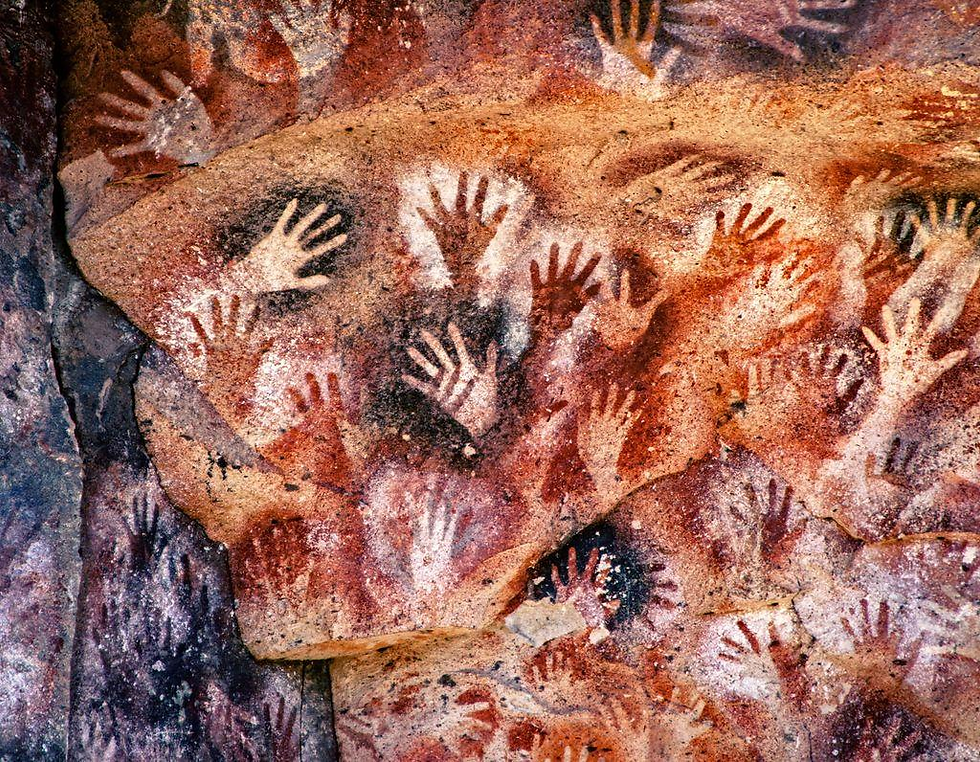
Every civilisation has left behind evidence of what it believed, feared, loved and imagined through its art. The walls of ancient caves, the sculptures of forgotten kingdoms, the poetry of revolutionaries, the music born from oppression — these are not just creative expressions. They are records of consciousness evolving.
Art is humanity looking back at itself.
But in a world where attention has become the most valuable currency, the role of the artist has become more complicated. The artist is no longer simply creating. The artist is competing against distraction.
A thousand voices are screaming for attention at every moment. Endless content floods our screens, designed to trigger reaction rather than reflection. In this environment, creating something meaningful becomes an act of resistance.
To make art that challenges, questions and expands perception is to push back against a culture that often rewards the shallow, the immediate and the disposable.
The artist carries a responsibility.
Not a responsibility to preach. Not a responsibility to conform. Not a responsibility to create what is comfortable.
The responsibility is to remain awake.

The Artist as a Consciousness Explorer
The greatest artists throughout history were not simply talented technicians. They were observers. They were students of humanity.
They explored the depths of existence and returned with something to share.
They questioned systems. They challenged beliefs. They exposed contradictions. They revealed beauty where others overlooked it.
An artist’s job is not necessarily to provide answers. It is to create better questions.
A song can make someone remember a feeling they buried.
A painting can force someone to confront a truth they avoided.
A film can introduce someone to a reality outside their own.
A photograph can freeze a moment of humanity that would otherwise disappear.
This is the power of art.
It expands the borders of individual consciousness and reminds us that our personal experience is only one small fragment of a much larger human story.

Creation Over Consumption
Modern culture has transformed many people from creators into consumers.
We scroll. We watch. We absorb.
But creation is an act of participation.
When someone creates something from nothing — a melody, a sculpture, a poem, a movement, a visual world — they are declaring:
“I was here. I experienced something. I have something to contribute.”
Creation is one of the most human acts available to us.
It is proof that we are not merely observers of reality. We are active participants in shaping it.
Every artist contributes energy into the collective consciousness.
The question is not whether your work influences people.
It does.
The question is: what are you influencing them towards?

The Rebel’s Responsibility
The true artist has always carried a rebellious spirit.
Not rebellion for the sake of destruction, but rebellion against limitation.
The artist challenges the boundaries of what is considered possible. They question inherited ideas and imagine alternatives.
Every cultural shift begins as someone’s impossible idea.
Every movement begins as someone’s unpopular thought.
Every new sound begins as someone refusing to repeat what already exists.
The artist must be willing to walk into uncertainty.
Because the unknown is where transformation begins.
The safest art is often the least impactful. It confirms what people already believe. It asks nothing from the audience.
But powerful art creates friction.
It disrupts.
It provokes.
It awakens.

Protecting the Sacred
There is something sacred about creating.
In a world increasingly obsessed with speed and output, artists must protect the deeper purpose behind their work.
Not everything needs to become a brand.
Not everything needs to become a strategy.
Not everything needs to be optimised.
Some things exist simply because they need to exist.
The artist’s role is to preserve imagination in a world constantly trying to replace it with convenience.
To remind people that they are more than consumers.
They are dreamers.
They are storytellers.
They are creators.
The Future Belongs to Those Who Imagine It
The world has always been shaped by those who could see beyond the present moment.
Artists are often the first to sense cultural shifts before they become visible. They feel the changes happening beneath the surface. They capture the mood of generations before history gives those feelings a name.
The artist is a signal.
A frequency.
A reminder of what humanity is capable of becoming.
The responsibility is not to create perfect art.
The responsibility is to create honest art.
Art that comes from curiosity.
Art that comes from courage.
Art that expands rather than contracts.
Because every authentic creation is a small act of consciousness expanding itself.
And perhaps that is the ultimate purpose of art:
Not to escape reality.
But to reveal more of it.



Comments